Zombie Gunship Survival: AC130
- 4.5
- Rating
- 10.00M
- Installs
- Free
- Price
 Analysis by App-foxy
Zombie Gunship Survival: AC130 caught my attention because it turns the usual zombie fight around. Instead of running through a ruined street with a rifle, I watched the battlefield from an AC-130 gunship and decided where the firepower should land. That change in viewpoint gives the game an immediate identity, but it also raises an important question: does the idea remain enjoyable after the first burst of novelty disappears?
After spending time with this action game from Flaregames, I found a mix of satisfying tactical decisions, base-management routines, and progression pressure. The free entry point makes it easy to try, while the Teen rating reflects the military setting and zombie violence. The core appeal is strongest when I am balancing quick aerial support with careful preparation on the ground. The weaker moments arrive when the surrounding progression starts feeling more like maintenance than meaningful strategy.
Why the first sessions feel so different
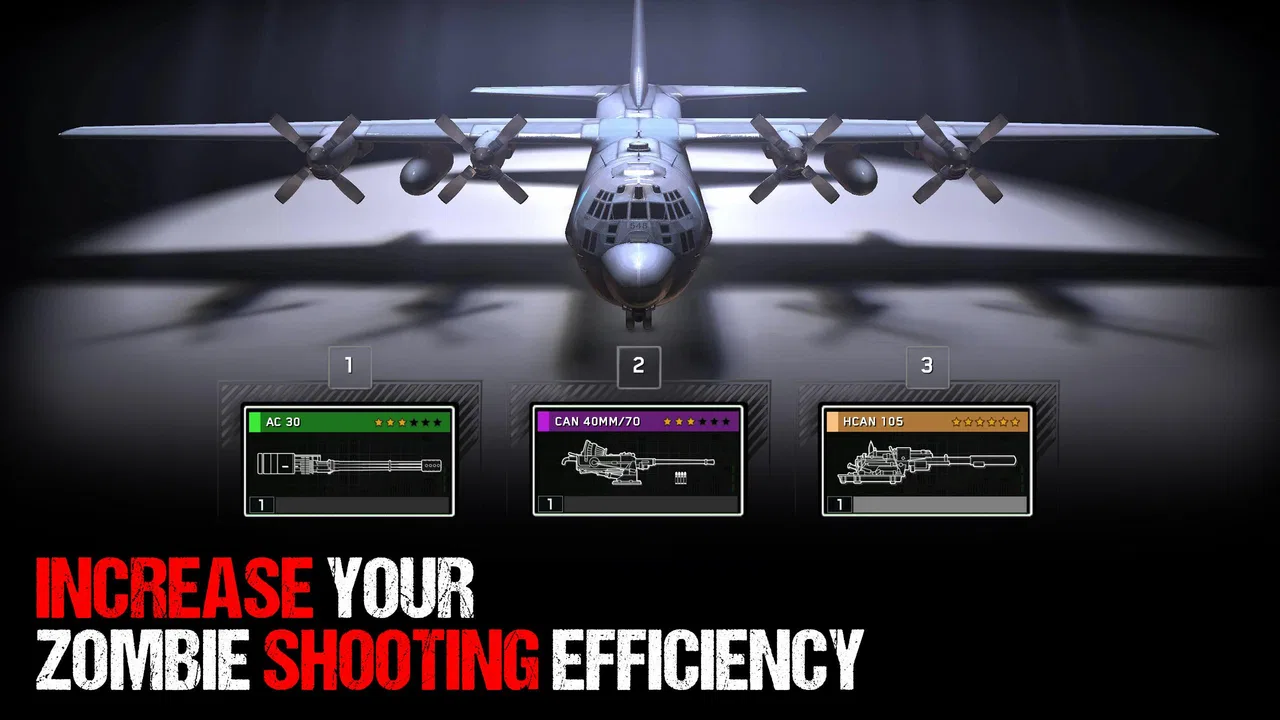
The AC-130 perspective is the game’s best hook. I am not simply aiming at whatever is closest. I have to read the movement of infected enemies, protect ground troops, and choose when a particular weapon is worth using. A crowded street can look manageable for a second and then become dangerous when several groups converge. That creates short moments of urgency without requiring the complicated controls of a full military simulation.
You May Also Like

 Blood Strike: 2.5 Anniversary
Blood Strike’s Loadouts Turn Every Drop Into a Tactical Gamble
A close look at Blood Strike’s custom loadouts: how fast access to signature weapons reshapes its battle royale rhythm, rewards preparation, and narrows the gap between fights.

 Pandora - Music & Podcasts
Pandora’s Music Is Easy to Start, but Harder to Recover
Pandora’s strength is its low-effort path from a seed to a station. Its weak spot is how much confidence it asks you to place in connection, setup, and quiet recovery.

 8 Ball Pool
 Is Built on Rivalries, Rematches, and Routine
A close look at the rivalries, rematches, shared routines, and unanswered safety questions that turn a quick pool match into a persistent mobile community.

 Samsung Music
’s Quiet Strength Is Playing What You Already Own
Its reach comes less from spectacle than from dependable access to a personal library. That simplicity is both the app’s strongest retention engine and its ceiling.

 AccuWeather: Weather Radar
AccuWeather Review: A Quick, Clear Forecast for Everyday Decisions
For everyday plans, the best forecast is the one you can understand quickly. AccuWeather makes rain timing, radar, and local conditions easy to act on, with a few trade-offs.

 Hill Climb Racing
Why Hill Climb Racing Still Turns Crashes Into One More Run
A tiny car, a bumpy hill and one more upgrade: Hill Climb Racing keeps resurfacing because its simple chaos makes every near-miss feel personal.
More From Our News Desk
View All News


The first missions are especially effective because they teach the central rhythm through action. I scan the area, identify the immediate threat, fire, and then watch the survivors continue their push. The gunship feels powerful, but it is not a magic solution. Poor timing can leave soldiers exposed, and firing carelessly can make a situation harder to control. That relationship between observation and intervention is more interesting than simply holding down a trigger.
The post-mission layer adds another reason to keep playing. I return to a survivor base, improve what I can, prepare for the next operation, and consider which resources deserve attention. This gives the game a longer shape than a sequence of disconnected shooting levels. The base is not just decoration; it is where the campaign’s forward movement becomes visible.
One useful early habit is to avoid spending every available resource as soon as it appears. I found it more satisfying to think about which improvement would remove a recurring obstacle rather than choosing the first upgrade that became available. A stronger offensive option may help immediately, but a more balanced approach can make later missions less dependent on perfect shooting.
What the battlefield asks of me
The game works best when I treat each mission as a small problem rather than a target gallery. Enemies do not all deserve the same response. A group moving toward vulnerable troops may matter more than a larger cluster that is still far away. This sounds simple, but the aerial viewpoint makes prioritization the main skill. I am constantly deciding whether to clear a path, rescue a push that is losing momentum, or save firepower for the next wave of danger.
The war drones add variety to that decision-making. They are not merely another button to press; I have to consider when their support will create the greatest advantage. Calling help too early can leave me without a useful answer later, while waiting too long can cost ground progress. That timing gives the action a planning element that separates it from many ordinary mobile zombie shooters.
I also appreciated the way the game makes the battlefield readable on a phone. The screen can become busy, yet the basic objective remains understandable. This matters in a realistic everyday situation: if I have only a few minutes while waiting for transport, I can start a mission and quickly understand what needs attention. It is not a game I need to reserve for a long uninterrupted evening, although longer sessions become more tempting once the base and campaign systems start pulling together.
Touch controls are naturally less precise than a mouse and keyboard, especially when several threats appear close together. I occasionally felt that the interface was asking for fast accuracy while giving me limited room for error. That is part of the mobile compromise. Players who expect the exact control of a dedicated strategy game may find the gunship actions simplified, but players who want accessible tactical shooting will probably adjust quickly.
How the game holds up after the opening excitement
The first-week appeal comes from learning how all the pieces interact. At the beginning, every new mission can reveal a different reason to adjust my approach. I am learning the weapon behavior, understanding the value of timing, and discovering how the survivor base affects future attempts. The sense of improvement is not limited to stronger equipment; I also become better at noticing danger before it becomes a crisis.
That learning curve is the reason the game feels more substantial than a basic arcade shooter. A normal zombie shooter often asks me to move, aim, and survive. Here, I am also managing the relationship between the air support and the people advancing below. The result is less frantic than a character-based action game and more deliberate than a simple wave-defense title.
Still, the opening can make the long-term routine look more varied than it eventually feels. Once I understand the most reliable responses, some missions become exercises in repeating a familiar preparation cycle. The game remains enjoyable when the battlefield forces adaptation, but the surrounding chores can reduce the sense of discovery.
For that reason, I recommend playing with a specific goal for each session. I might focus on improving a weak part of my base, testing a different support choice, or clearing a mission without wasting key assistance. That approach gives ordinary progress a personal challenge. Without it, the game can drift into a loop of collecting, upgrading, and launching the next operation simply because it is available.
Month-to-month value depends on your relationship with routine
The long-term question is not whether the game has enough action to fill one afternoon. It does. The more important question is whether its repeated preparation still feels worthwhile after the novelty of commanding an AC-130 has faded. In my experience, the answer depends heavily on how much I enjoy gradual improvement and repeated tactical decisions.
Players who like persistent mobile games will find a familiar structure here. The base gives progress a physical place, while missions provide the reason to keep improving it. Each return can feel productive because there is usually something to prepare, upgrade, or reconsider. That makes the game suitable for someone who enjoys checking in regularly rather than finishing a self-contained campaign and moving on.
On the other hand, I would not choose it for a player who wants every session to deliver a completely new idea. The core loop remains centered on supporting ground operations from above. The pleasure comes from refining that loop, not from constant reinvention. If I need a game with a clear ending, a tightly authored story, or dramatic changes from chapter to chapter, another action title may offer better lasting value.
The free price lowers the risk of trying it, but the in-app purchase range stretches from $0.99 to $219.99 per item. That is important when judging the game as a long-term habit. I can begin without paying, yet the presence of expensive optional purchases may affect how comfortable I feel with the progression pace. I prefer to decide in advance whether I am playing patiently or spending occasionally, rather than making that choice during a frustrating mission.
My practical advice is to treat purchases as a convenience decision, not as part of the basic control strategy. First learn whether the gunship viewpoint and base loop genuinely suit you. If the game already feels repetitive before you spend anything, payment is unlikely to fix the underlying issue. If you enjoy the routine but want to reduce waiting or smooth a difficult stretch, you can make that choice with a clearer understanding of what you are buying into.
The maintenance burden behind the action
The base-management side gives the game persistence, but it also creates its main maintenance burden. Progress is not only about performing well in a mission. I also need to keep track of preparation, improvements, and the condition of my overall campaign. That can be satisfying when I am in the mood for a continuing project, but it can feel like homework when I only wanted a quick round of aerial shooting.
This is where the game’s habit-forming design becomes a trade-off. A short visit can be useful because I can make a small improvement or prepare for another operation. Yet a short visit can also feel incomplete if the next meaningful step requires more time, resources, or repeated missions. The game rewards regular attention, but players who play only occasionally may need to spend part of each return remembering where they left off.
I found that a simple personal routine helps. Before launching into action, I check the base with one question in mind: what is the next obstacle I am trying to remove? That keeps preparation focused. If I upgrade everything without a reason, the management layer becomes a list of chores. If I connect each choice to a battlefield problem, the base feels like part of the strategy rather than a separate menu.
The same principle applies to the gunship. Rather than selecting support automatically, I try to remember which threat caused trouble in the previous mission. Was I too slow to protect the advancing troops? Did I waste a powerful response on a minor group? Reviewing that mistake before the next attempt gives the repeated structure more meaning and reduces the feeling that I am simply grinding through identical tasks.
Device compatibility is also reasonably broad for a modern mobile game because it runs on Android 6.0 or later. The current version is 1.7.53, so users with older supported devices can still consider it, although the visual density and action may feel more comfortable on a phone with a larger screen. I would particularly favor a larger display for players who struggle to distinguish several threats at once.
Where fatigue starts to replace excitement
The biggest source of fatigue is repetition in the progression loop. The aerial combat remains distinctive, but repeated preparation can make the overall experience feel slower than the opening suggests. When a mission is lost because I made a bad tactical choice, I usually want to retry. When progress feels blocked mainly by the surrounding routine, my motivation drops more quickly.
Another limitation is that the game’s power fantasy can conflict with its tactical demands. The AC-130 feels formidable, yet I still have to accept that not every problem can be erased instantly. That is good for balance, but it may disappoint players who come for uncomplicated destruction. The most satisfying moments are not the largest explosions; they are the moments when a carefully timed intervention saves an operation that was about to collapse.
The Teen content rating is worth considering for families choosing games together. The setting is built around an apocalypse, firearms, military equipment, and zombie combat. I would not describe it as a gentle cartoon survival game. The presentation is designed for players comfortable with that darker action theme.
There is also a difference between this game and the usual alternatives in the category. A conventional third-person zombie shooter puts me inside the character’s movement and makes personal aim the central skill. A tower-defense game usually emphasizes fixed placement and predictable lanes. Zombie Gunship Survival: AC130 sits between those ideas: I observe from above, intervene with firepower, and support units whose movement I do not control in the same direct way. That makes it a better choice for tactical spectatorship than for players who want close-range movement and constant character control.
Compared with a pure strategy game, it is more immediate and easier to understand in short sessions. Compared with a pure action game, it asks for more patience and preparation. That middle position is its strength, but also its boundary. Someone seeking deep map planning may find the systems too streamlined, while someone seeking nonstop shooting may resent the management layer.
Who is most likely to keep playing
I think the best audience is a player who enjoys military-themed action, zombie settings, and gradual account progression but does not need every mission to be radically different. The game is particularly suited to people who like making decisions from a command perspective. You are close enough to the action to feel responsible, yet far enough away to think about priorities instead of simply reacting to whatever is in front of your character.
It also works for players who enjoy a regular mobile routine. A few minutes can be enough to inspect progress or attempt a focused task, while a longer session lets the mission and base systems connect. The game’s appeal is strongest when those small returns feel like part of a continuing campaign rather than isolated bursts of entertainment.
I would suggest skipping it if you dislike in-app purchase pressure, persistent resource management, or games that ask you to repeat missions while building toward the next improvement. The broad purchase range makes that concern more relevant, even though the game itself is free to start. I would also point players toward another option if their priority is a story-driven zombie adventure with a strong cast, or a competitive shooter where direct reflexes decide every encounter.
The audience size suggests that the concept has reached a substantial mobile community: it has passed 10 million installs, with an average rating of 4.5 from around 394 thousand ratings and roughly 34 thousand written reviews. Those figures do not change my personal reservations about repetition, but they do fit my impression that the central gunship idea is easy to understand and broadly appealing.
My long-term verdict on keeping it installed
After the first-week excitement fades, Zombie Gunship Survival: AC130 earns lasting space only if I continue to enjoy its particular rhythm: observe, support, prepare, improve, and try again. The AC-130 viewpoint remains a memorable foundation, and the best missions create genuine tension through timing rather than raw speed. The base gives each operation consequences, while drones and aerial support add choices that are more thoughtful than the store-style premise might suggest.
Its weaknesses are equally clear. The maintenance layer can turn regular play into routine, repetition may wear down enthusiasm, and the available in-app purchases make the long-term progression worth approaching deliberately. I would not recommend installing it blindly for someone who wants a quick arcade shooter. The game asks for a little patience before its tactical identity becomes clear.
For me, it is worth keeping installed when I want a mobile action game that feels like directing a crisis from above rather than personally fighting through every corridor. I would play it in focused bursts, set my own goals, and avoid spending until I knew the recurring loop suited me. The lasting value comes from improving decisions, not merely increasing firepower.
That makes the game a qualified recommendation. It is free, distinctive, and approachable, and Flaregames has built a strong premise around a viewpoint that most zombie action games do not use. Just remember what you are committing to: not only gunship combat, but also the steady upkeep of a survivor campaign. If that combination sounds satisfying, this action game can remain a dependable part of your mobile rotation long after the first spectacular strike.
FAQs for Zombie Gunship Survival: AC130
01What is Zombie Gunship Survival: AC130?
Zombie Gunship Survival: AC130 is a strategic action game that combines aerial combat, base management, and zombie survival. You control an AC-130 gunship from above, supporting ground troops and destroying undead enemies, while also building and upgrading a military base. Missions involve tactical decisions, resource management, weapon improvements, and progressively stronger zombie threats.
02How does the AC-130 gameplay work?
The main combat feature places you inside an AC-130 gunship, where you observe the battlefield from above and provide covering fire for soldiers on the ground. You can switch between different weapons, target zombie groups, protect friendly units, and destroy objectives. Accuracy and timing are important because ammunition, reloads, and enemy movements can affect the outcome of every mission.
03Does Zombie Gunship Survival: AC130 require an internet connection?
An internet connection is generally recommended, and some features may require online access to function correctly. Online connectivity can be needed for account synchronization, events, advertisements, purchases, leaderboards, and other live-service content. Because requirements may vary by version and device, players should check the current store listing if they need a game that works reliably while completely offline.
04Is Zombie Gunship Survival: AC130 free to download and play?
The game is free to download, but it includes optional in-app purchases. These purchases can provide resources, upgrades, special offers, or progression assistance, although players can still experience the core gameplay without paying. Progress may take longer when avoiding purchases, so users should review the available spending controls, especially if children use the device.
05What devices can run Zombie Gunship Survival: AC130?
Zombie Gunship Survival: AC130 is designed for modern Android and iOS devices, but the exact compatibility depends on the operating system version, available storage, memory, and hardware performance. The game includes detailed visuals and can use noticeable battery power during longer sessions. Before downloading, check the official Google Play or App Store page for the latest requirements and supported devices.
Pros
- Intuitive controls make aiming and upgrading easy to learn.
- Many weapons and aircraft upgrades provide long-term progression.
- Base-building adds strategy beyond the shooting missions.
- Regular events and challenges offer extra rewards and objectives.
- The dark atmosphere and sound design create strong zombie-survival tension.
Cons
- Some missions become repetitive after extended play sessions.
- Upgrades can take a long time without spending premium currency.
- The game requires a stable internet connection for most features.
- Large updates may consume considerable storage space on your device.
- Energy limits can interrupt gameplay when you want longer sessions.

Zombie Gunship Survival: AC130
Gallery